Sustainable, efficient and aesthetic
The Aire & District Lofts in Leeds
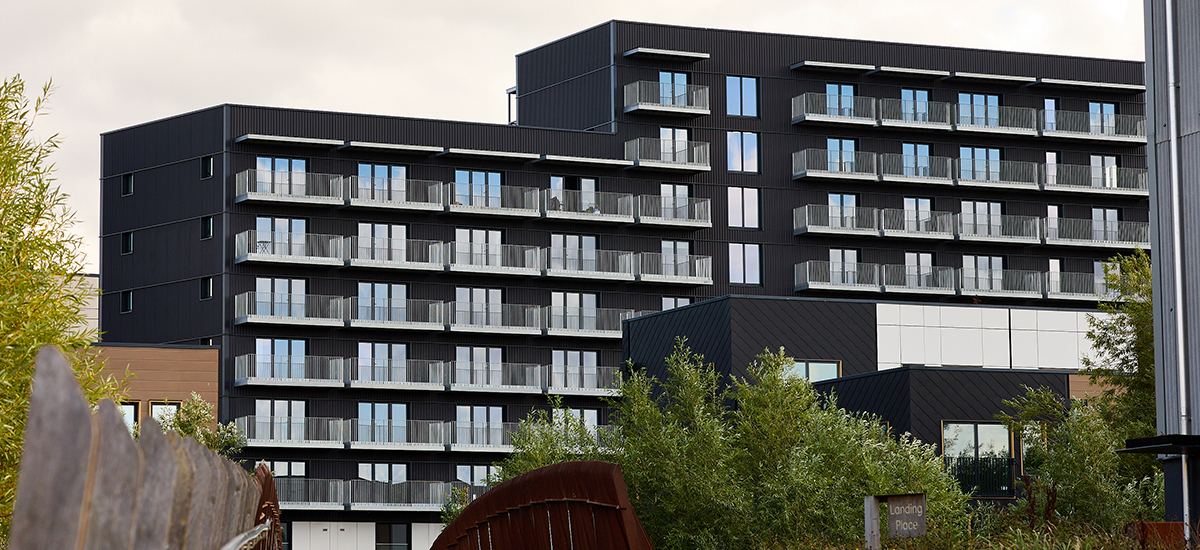
The construction of two apartment buildings within the ground-breaking Climate Innovation District urban regeneration project in Leeds demonstrates how the EJOT CROSSFIX® system can be used to incorporate rainscreen facades into highly sustainable buildings, without the need to vastly increase insulation depth.
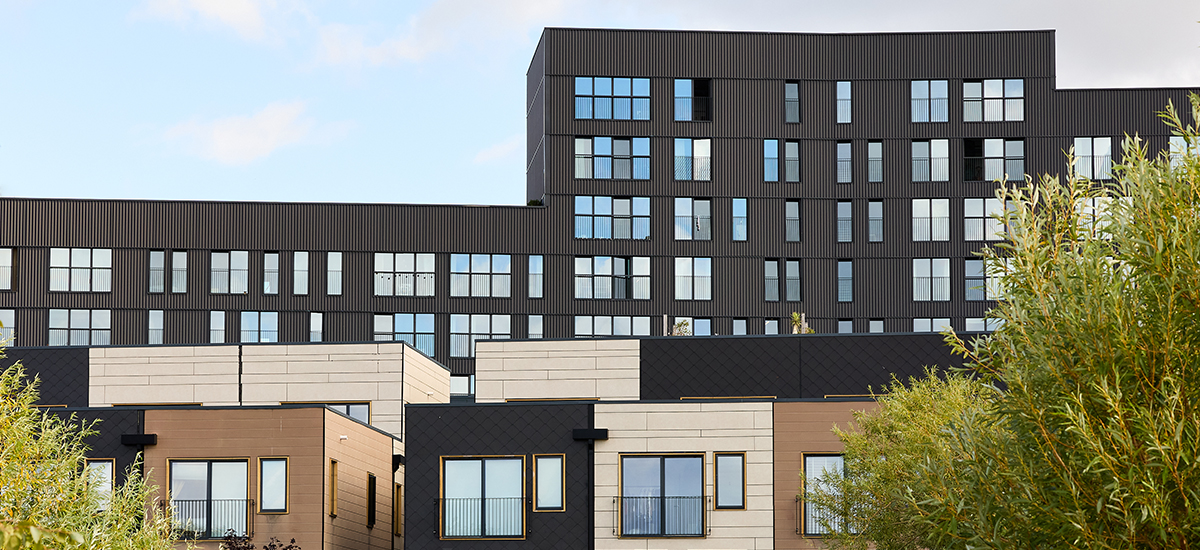
Developed by Citu in partnership with one of Scandinavia’s leading architectural practices, White Arkitekter, and civil and structural engineers Civic, the Climate Innovation District is not only boosting the supply of high quality urban housing, but actually creating an entire new sustainable neighbourhood. Over 500 low energy homes with integrated amenities have been created, with a design that has been PHPP (Passive House Planning Package) assessed. The development’s two apartment buildings, known as volumes, are constructed using a steel structure with composite metal deck floors and a light gauge steel framing system. This facilitates a RVF featuring two types of Swisspearl products externally, both with a fibre cement composition. Each volume, named Aire Lofts and District Lofts, takes the form of a multi-storey residential building up to 10 floors in height, providing various types of apartments. EJOTCROSSFIX® was selected to provide the critically important substructure because it enabled the construction of a highly insulated façade without compromising aesthetics, with the added benefit of streamlining installation.
How
The entire façade of District Lofts was constructed by Hansen Facades using CROSSFIX® , in conjunction with main contractor Artium Construction. It was chosen following its successful deployment on Aire Lofts, where the system’s versatility and effectiveness were first recognised by Citu after it was used for secret-fix panels used to demark the duplex apartments at the ground and first floor levels.
The EWS1 (External Wall System 1) fire safety rating for the facades had to be balanced with thermal and ventilation goals. Given the high thermal requirements, designed to a weighted U Value (based on a typical subframe arrangement) of 0.13 W/m²k, the substructure cavity had to be sufficiently deep to accommodate insulation with a thickness of 250mm and maintain the required ventilation for a system of this type.
Developed by Citu in partnership with one of Scandinavia’s leading architectural practices, White Arkitekter, and civil and structural engineers Civic, the Climate Innovation District is not only boosting the supply of high quality urban housing, but actually creating an entire new sustainable neighbourhood. Over 500 low energy homes with integrated amenities have been created, with a design that has been PHPP (Passive House Planning Package) assessed. The development’s two apartment buildings, known as volumes, are constructed using a steel structure with composite metal deck floors and a light gauge steel framing system. This facilitates a RVF featuring two types of Swisspearl products externally, both with a fibre cement composition. Each volume, named Aire Lofts and District Lofts, takes the form of a multi-storey residential building up to 10 floors in height, providing various types of apartments. EJOT
How CROSSFIX® meets multiple performance goals
The entire façade of District Lofts was constructed by Hansen Facades using The EWS1 (External Wall System 1) fire safety rating for the facades had to be balanced with thermal and ventilation goals. Given the high thermal requirements, designed to a weighted U Value (based on a typical subframe arrangement) of 0.13 W/m²k, the substructure cavity had to be sufficiently deep to accommodate insulation with a thickness of 250mm and maintain the required ventilation for a system of this type.
CROSSFIX® as a sustainable façade enabler
The specified In addition, considering the whole life cycle of the products used to form the facades,
A smart solution for modern construction methods
The multiple sustainability benefits provided byValuable efficiency benefits were delivered on-site because