PEARLOCK® system
The new system for the invisible fastening of rainscreen facade claddings
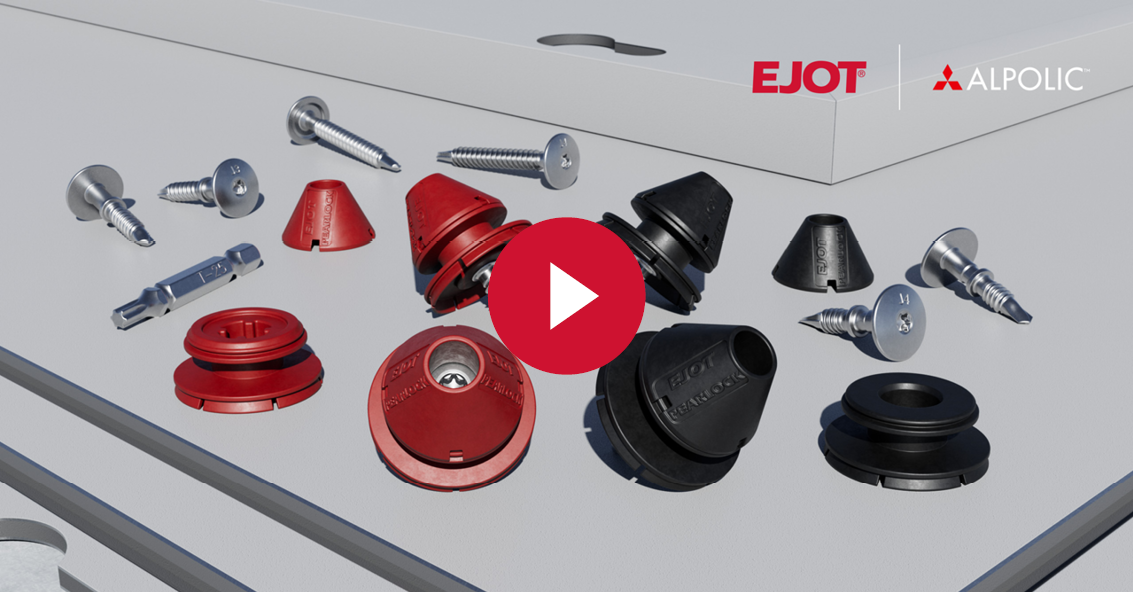
PEARLOCK® by EJOT is the new system for the invisible fastening of ALPOLIC™ aluminium composite panels in rainscreen facades (RVF). It opens up new design possibilities and enables high-quality, architecturally sophisticated facades – completely free of visually disruptive fastening points.
With the new, patented PEARLOCK® system, EJOT now presents an innovative solution that fundamentally simplifies this process. PEARLOCK® significantly optimizes the interaction between the fastener and the keyhole geometry. The cone head allows the fastening point to be found much more easily and quickly – even when visibility is restricted during installation. The result: greater efficiency, fewer installation errors and a consistently more comfortable workflow. PEARLOCK® combines setting tool and mounting element in one system: set, locate and hang.
With the new, patented PEARLOCK® system, EJOT now presents an innovative solution that fundamentally simplifies this process. PEARLOCK® significantly optimizes the interaction between the fastener and the keyhole geometry. The cone head allows the fastening point to be found much more easily and quickly – even when visibility is restricted during installation. The result: greater efficiency, fewer installation errors and a consistently more comfortable workflow. PEARLOCK® combines setting tool and mounting element in one system: set, locate and hang.
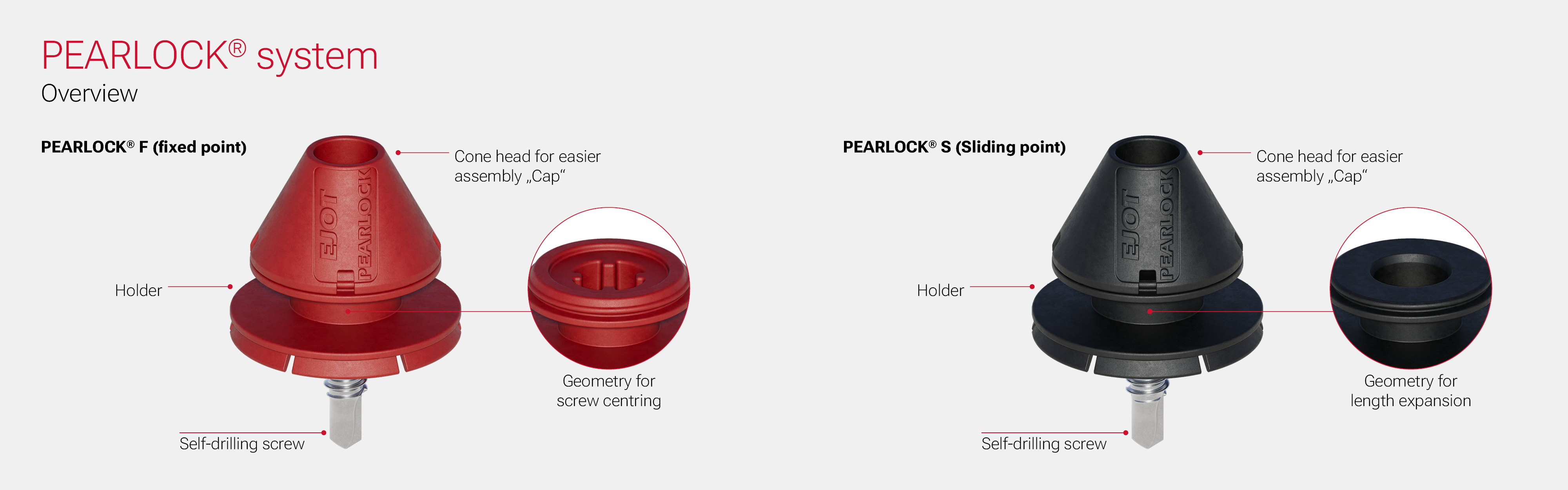
PEARLOCK® is a combination of the well-known EJOT LT-TD screws and plastic components that allow the creation of fixed and sliding points. Thanks to the integrated stop collar at the upper edge of the screw’s clamping zone, a fixed stop at a 90° angle to the substructure is guaranteed. The perfectly plumb alignment ensures a defined clamping length on aluminium and steel substructures.
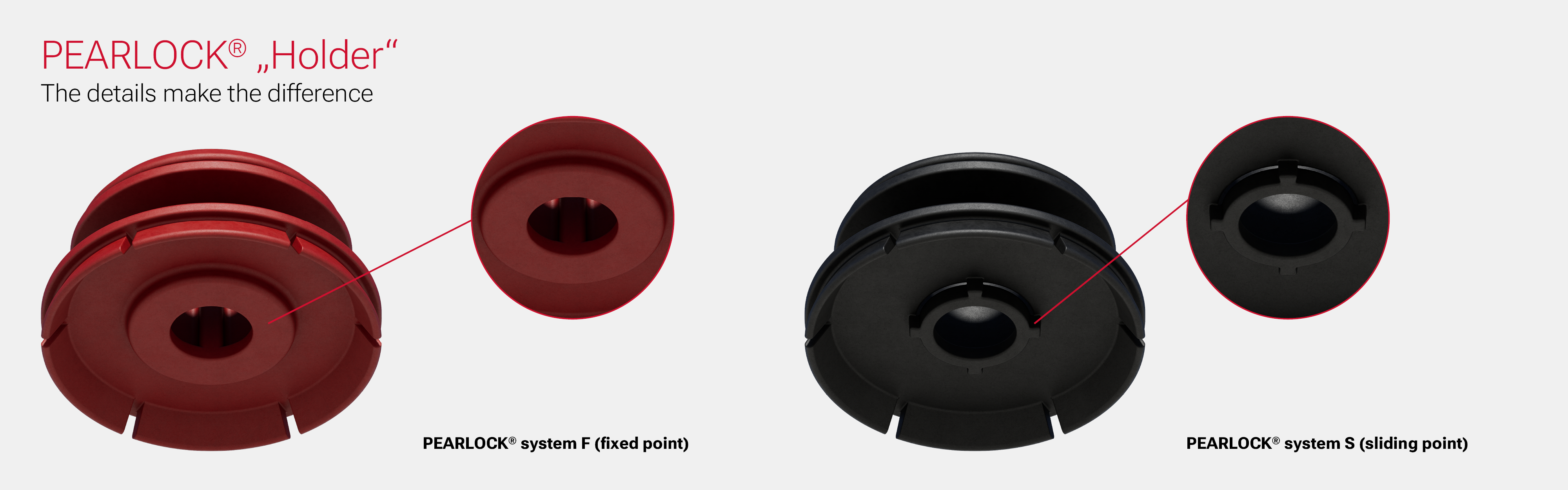
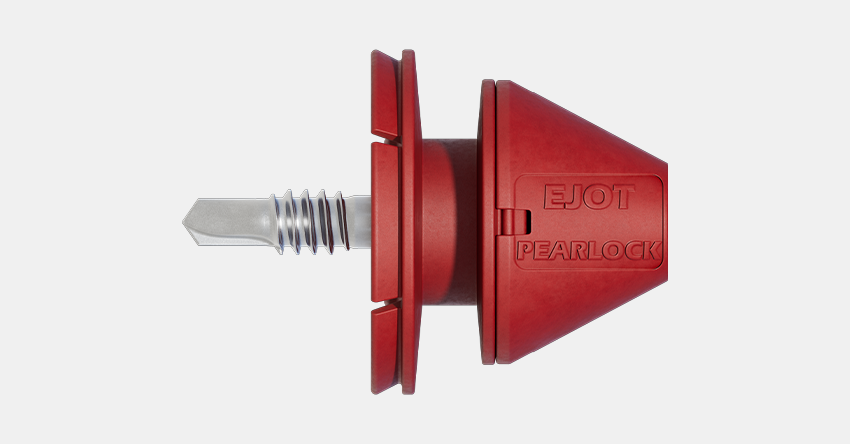
The fixed point variant (red) encloses the screw directly at the stop collar. The complete enclosure prevents any relative movement within the PEARLOCK® system, ensuring that the attachment is held permanently and precisely in the ideal, centred position.
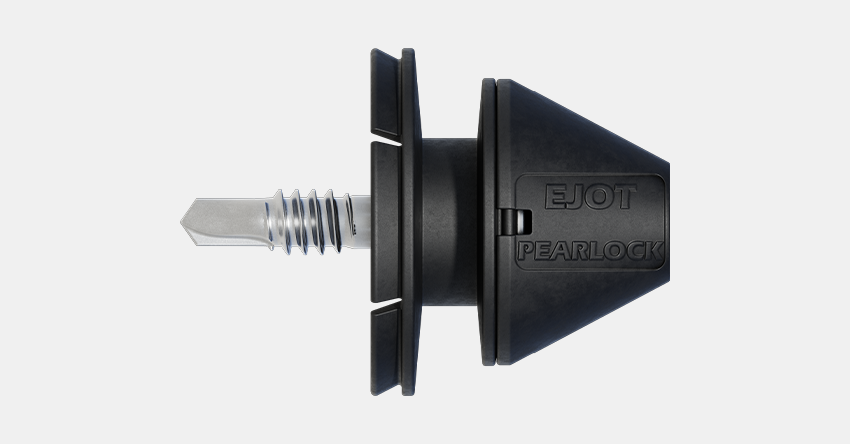
The sliding point variant (black) also encompasses the screw‘s stop collar and centres it with the aid of a ring held in place by four fine connecting bars. Under transverse loading – such as thermal expansion – these bars break off in a controlled manner, allowing for controlled dilatation (relative displacement) of up to 3 mm in any direction. This is ideal when cladding and substructures need to compensate for stress without losing their structural integrity.
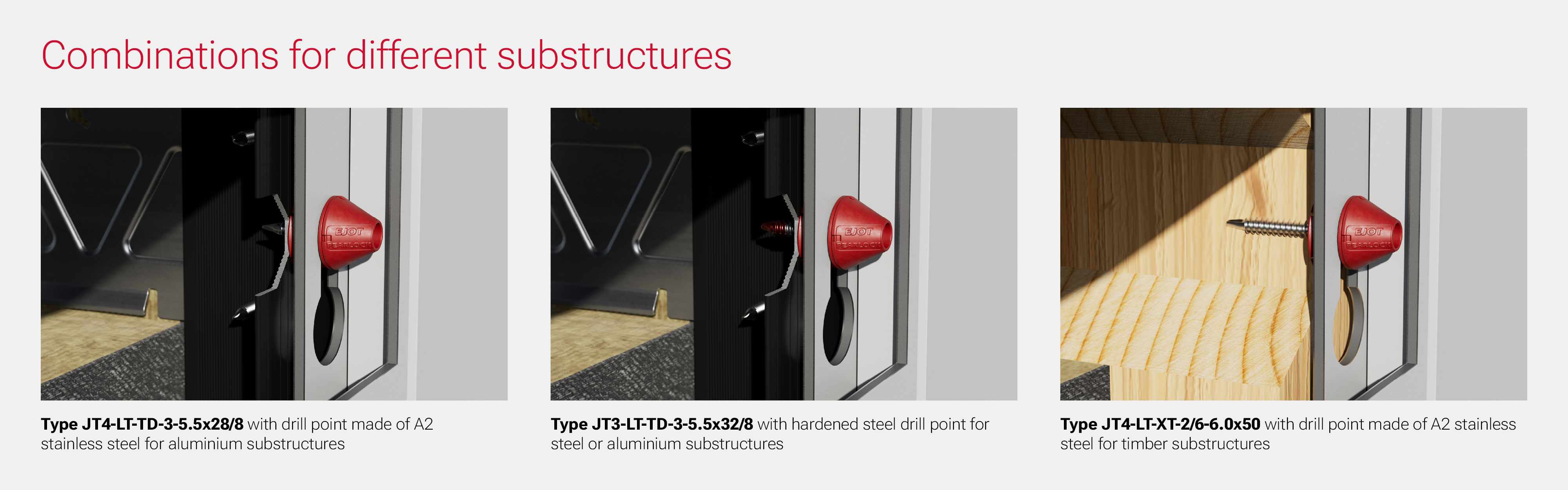
With the JT4-LT-XT-2/6-6.0×50 screw, ALPOLIC™ aluminium composite panels can be fastened to timber substructures. EJOT sets with PEARLOCK® a new standard for innovative keyhole fastening of ALPOLIC™ aluminium composite panels on aluminium, steel and timber substructures.
The sliding point variant (black) also encompasses the screw‘s stop collar and centres it with the aid of a ring held in place by four fine connecting bars. Under transverse loading – such as thermal expansion – these bars break off in a controlled manner, allowing for controlled dilatation (relative displacement) of up to 3 mm in any direction. This is ideal when cladding and substructures need to compensate for stress without losing their structural integrity.
Advantages
- Invisible fastening: Facade stays perfectly smooth and harmonious
- Combined system: set, locate and hang
- Efficient installation
- Compatible with ALPOLIC™ keyhole drilling
- LT-TD screws: stop collar for vertical alignment, strip-proof by non-threaded part
With the JT4-LT-XT-2/6-6.0×50 screw, ALPOLIC™ aluminium composite panels can be fastened to timber substructures. EJOT sets with PEARLOCK® a new standard for innovative keyhole fastening of ALPOLIC™ aluminium composite panels on aluminium, steel and timber substructures.
The system also impresses in terms of sustainability: facades can be dismantled without difficulty and individual ALPOLIC™ aluminium composite panels can be replaced, further increasing the overall efficiency of the system.