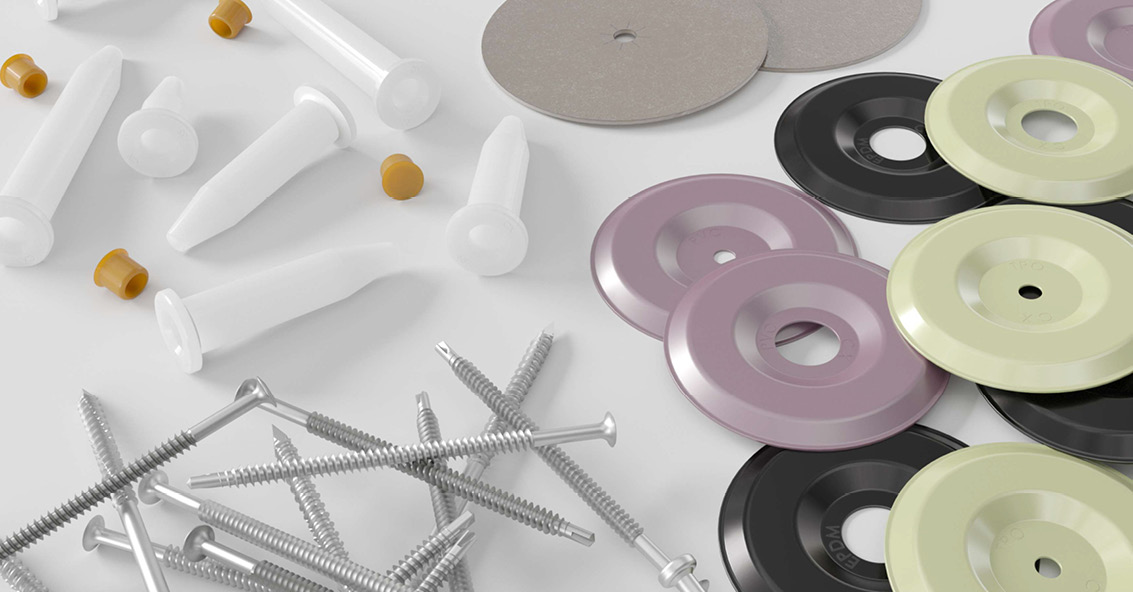
Electro-bonding system
Non-penetrating. Flexible. Efficient.
When mechanically fastening flat roof waterproofing membranes, fasteners are usually positioned along the membrane overlaps. Particularly with complex roof geometries, parapets or rising walls, this type of fastening can involve increased installation effort.
The EJOT electro-bonding system provides a flexible alternative. Using an electro-bonding tool, the roofing membrane is bonded to special metal anchor plates that have previously been mechanically fastened. This means that the roofing membrane is not penetrated at the fastening points.
A key advantage is that the fastening points can be positioned independently of the membrane overlaps. This allows the number and positioning of the fastening points to be adapted to the specific requirements of the roof area.
The system is suitable for both large roof areas and confined or challenging areas.
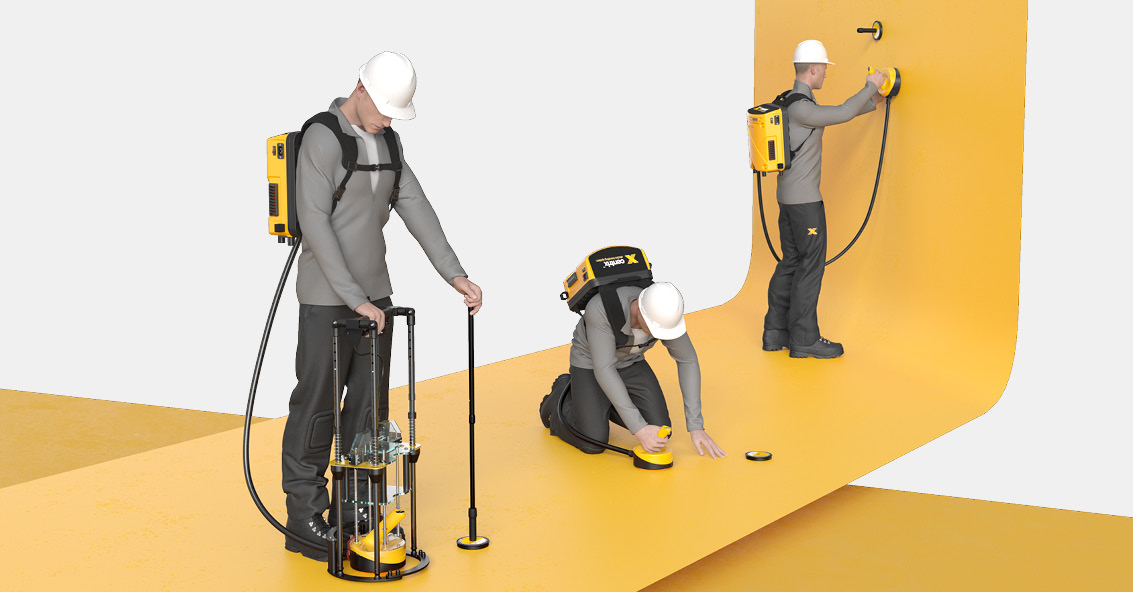
Advantages of the EJOT electro-bonding system
- Non-penetrating fastening
The roofing membrane is bonded to the underlying metal anchor plates without penetrating the membrane at the fastening points. - Flexible fastener positioning
The fastening points can be distributed independently of the membrane overlaps and positioned according to the wind uplift loads. - Reduced material use
The use of wider roofing membranes and fewer or narrower overlaps can reduce the amount of material required - Ergonomic installation
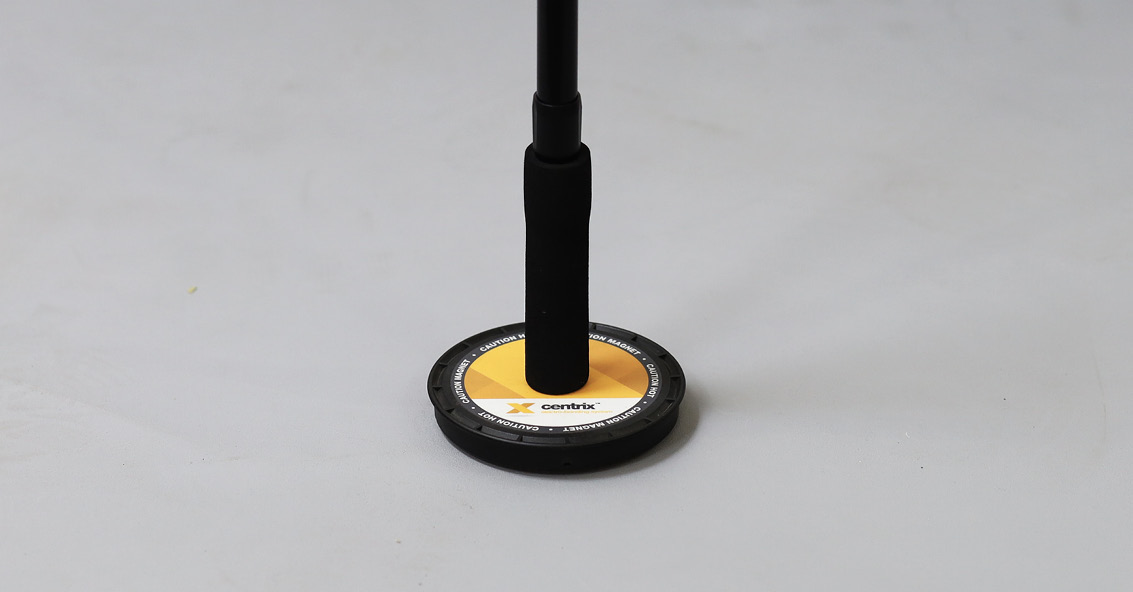
The electro-bonding tool can be used while kneeling or, with the EJOT CX tool holder, ergonomically while standing.
How the system works
The system combines the mechanical fastening of the thermal insulation with an electro-bonded connection between the metal anchor plate and the roofing membrane Installation is carried out in three steps.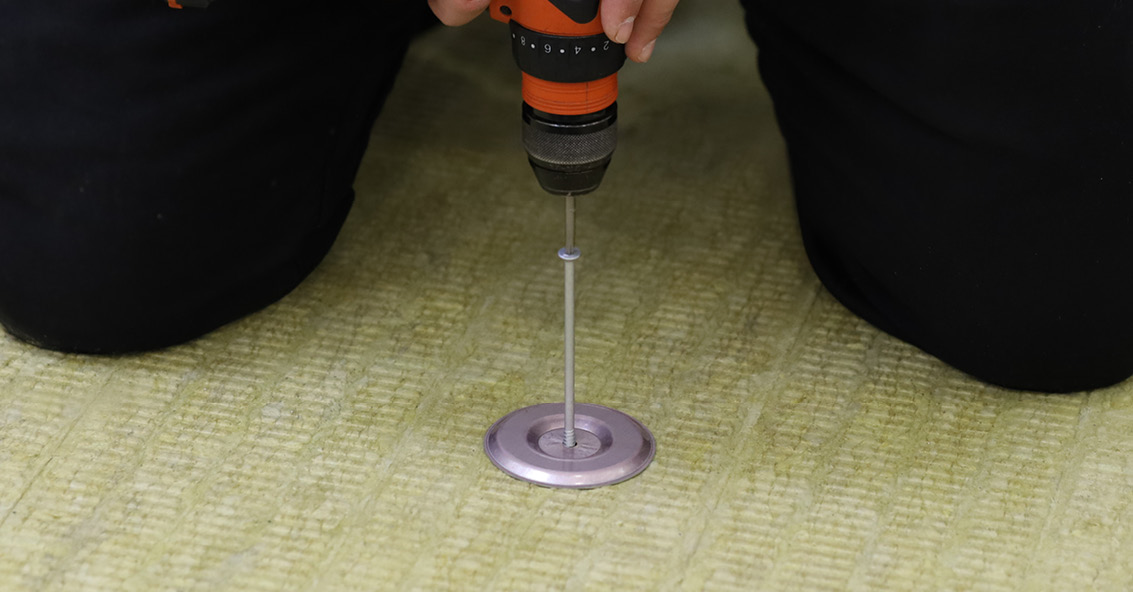
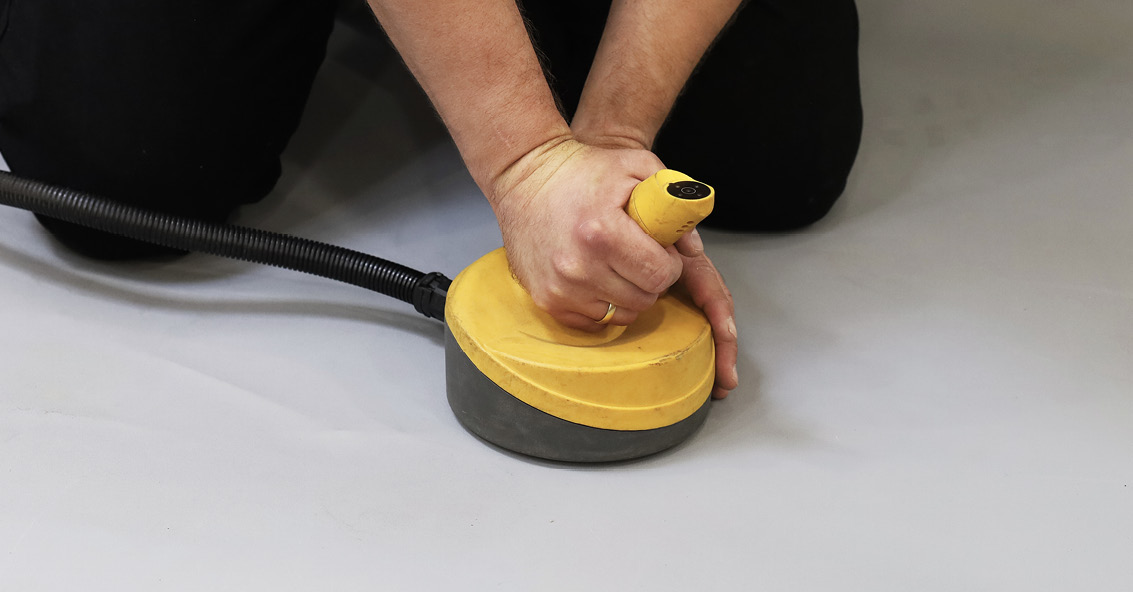
Versatile applications
The EJOT electro-bonding system enables flexible fastening of roofing membranes on a variety of flat roof constructions. The system is particularly advantageous in areas where conventional fastening along the membrane overlaps is difficult or time-consuming. The electro-bonding tool can be used both horizontally and vertically.According to the system documentation, the method is suitable for common insulation materials and roofing membrane materials such as PVC, TPO, FPO, TPE, PP and EPDM The suitability of the specific combination of materials must be verified.